[ Patient Education ]
learn aboutWound Care
A plain-language reference for common wound types.
In a medical emergency, call 911 — this page is for general reference only.
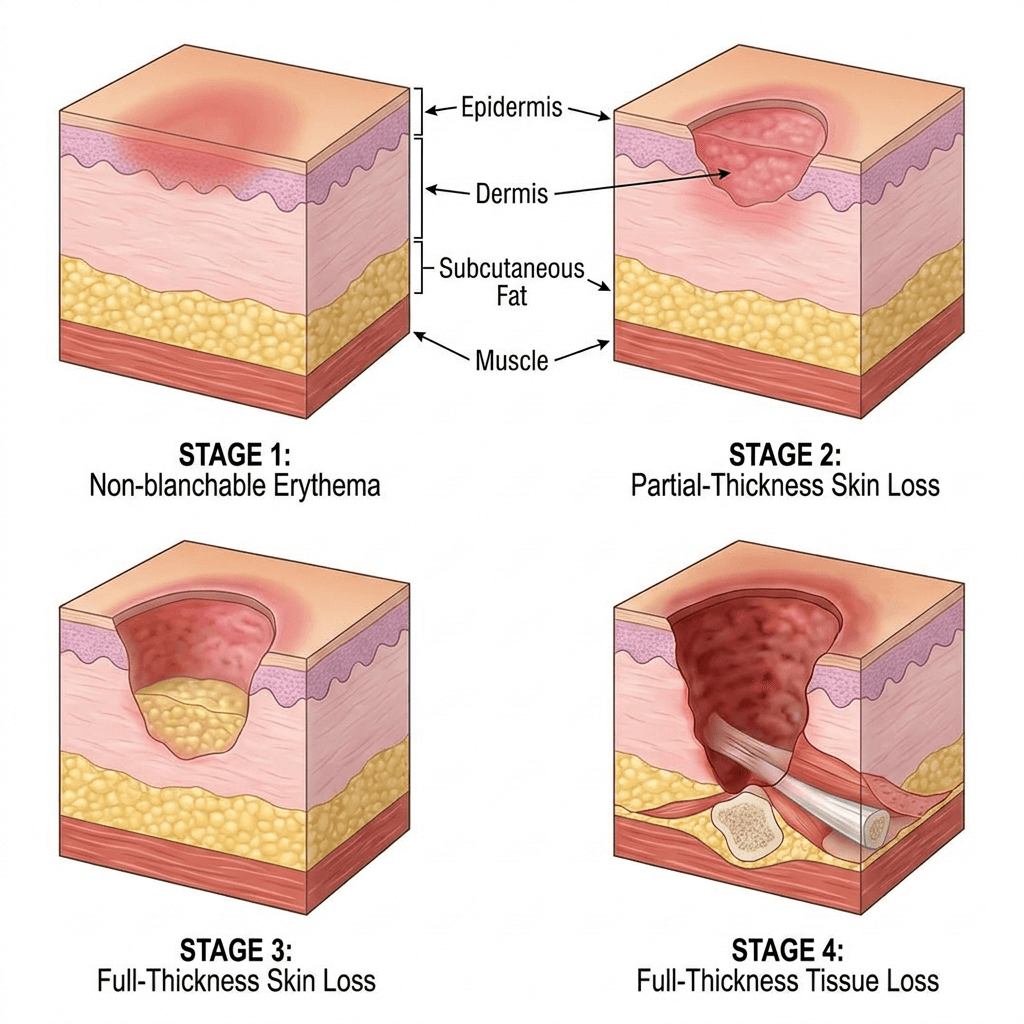
[ 01 ] Bedsores
on the subject ofPressure Ulcers
What It Is
Pressure injuries are localized damage to the skin and underlying tissue due to prolonged pressure, commonly seen in patients with limited mobility.
Patient Education
- [ · ]Reposition every two hours
- [ · ]Use pressure-relieving surfaces
- [ · ]Maintain skin hygiene and nutrition
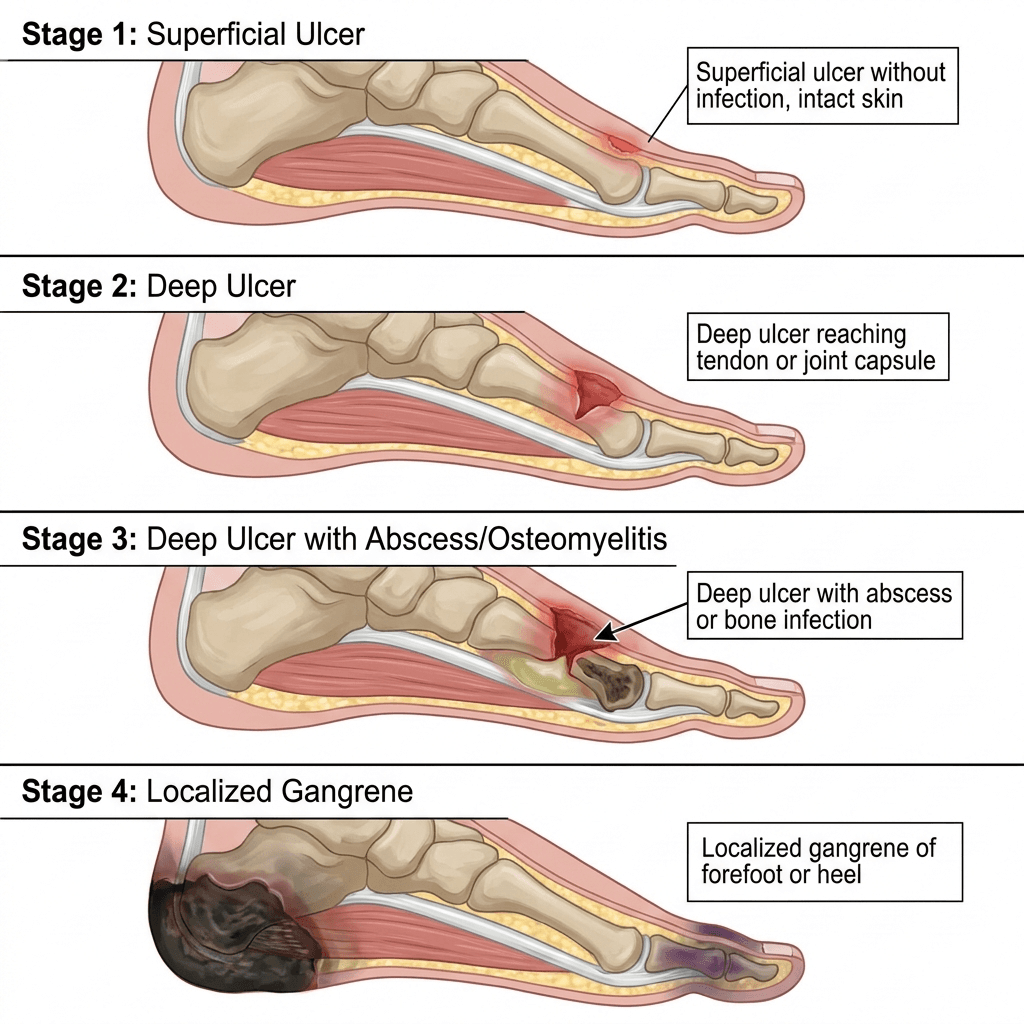
[ 02 ] Diabetic
on the subject ofDiabetic Foot Ulcers
What It Is
Chronic wounds caused by diabetes-related neuropathy and reduced circulation, often on the bottom of the foot.
Patient Education
- [ · ]Inspect feet daily
- [ · ]Control blood glucose levels
- [ · ]Wear protective footwear
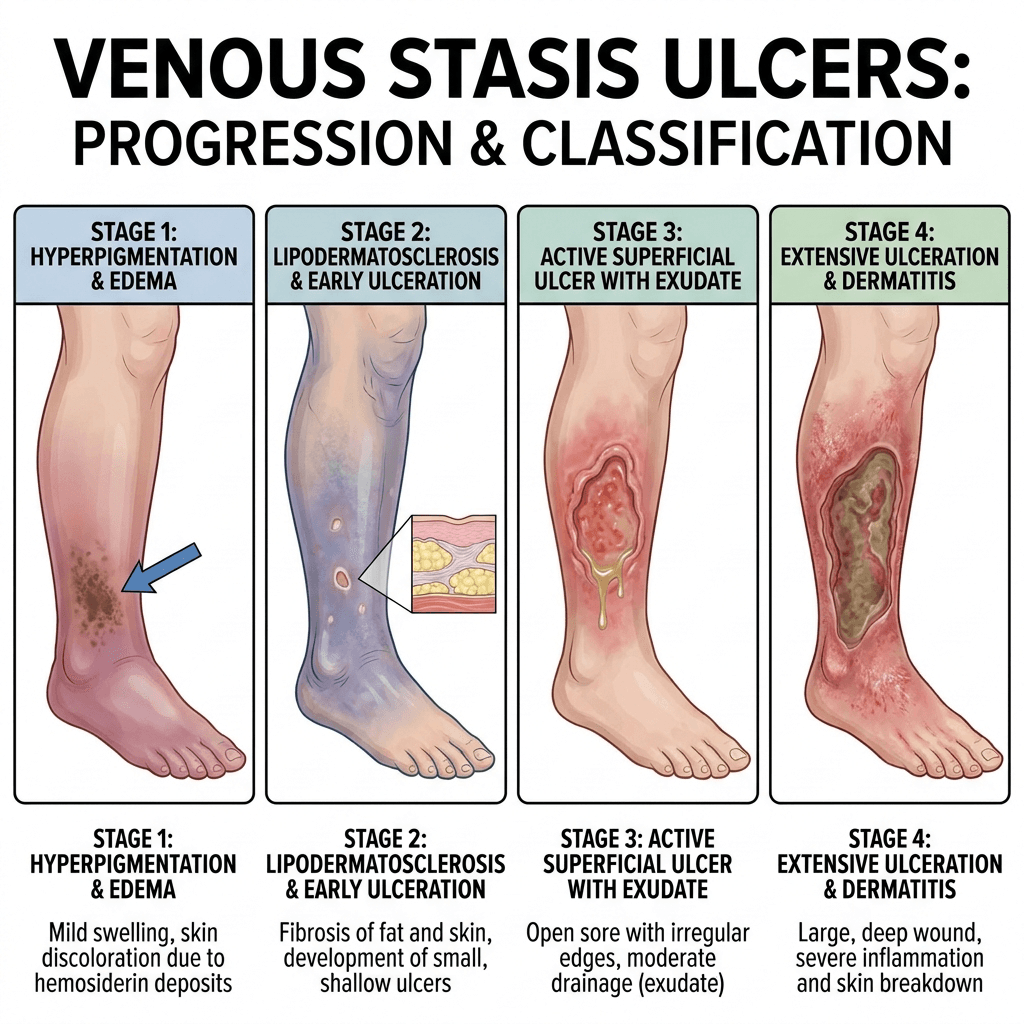
[ 03 ] Venous
on the subject ofVenous Stasis Ulcers
What It Is
Wounds caused by chronic venous insufficiency, typically on the lower legs with associated swelling.
Patient Education
- [ · ]Elevate legs daily
- [ · ]Use compression therapy
- [ · ]Stay mobile to improve circulation
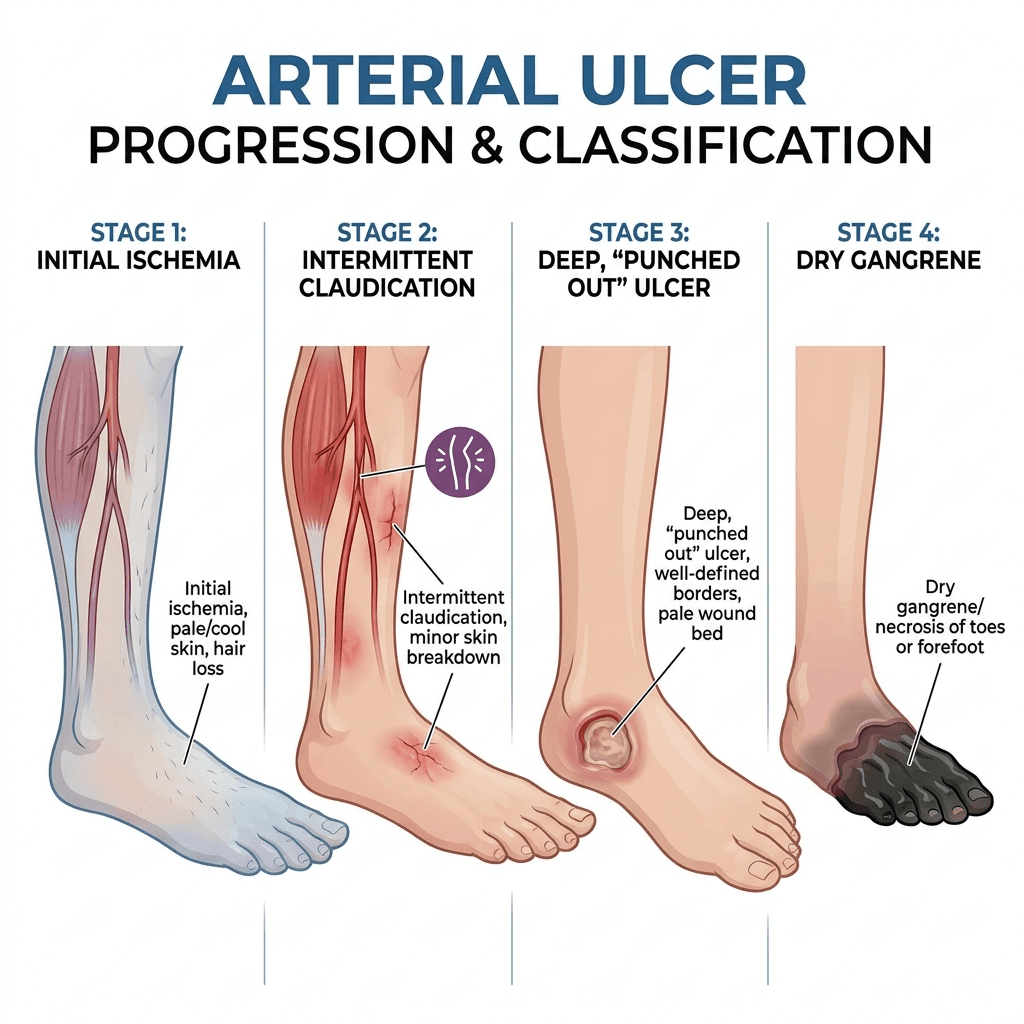
[ 04 ] Arterial
on the subject ofArterial Ulcers
What It Is
Wounds caused by reduced arterial blood flow — often painful and slow to heal.
Patient Education
- [ · ]Avoid smoking
- [ · ]Manage blood pressure and cholesterol
- [ · ]Protect feet from injury
[ 05 ] Post-Op
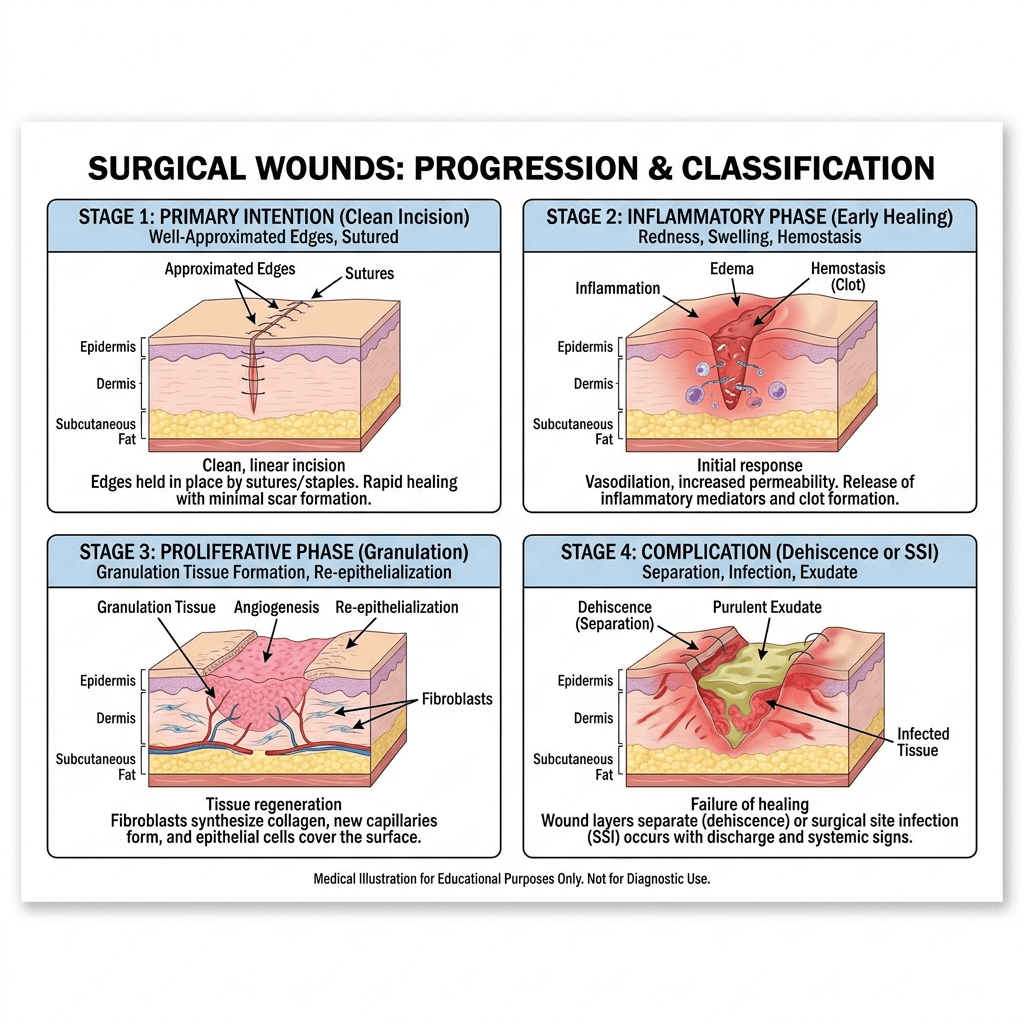
on the subject ofSurgical Wounds
What It Is
Post-operative wounds that require careful monitoring for healing and infection prevention.
Patient Education
- [ · ]Follow dressing-change instructions
- [ · ]Monitor for infection
- [ · ]Keep follow-up appointments
[ 06 ] Thermal
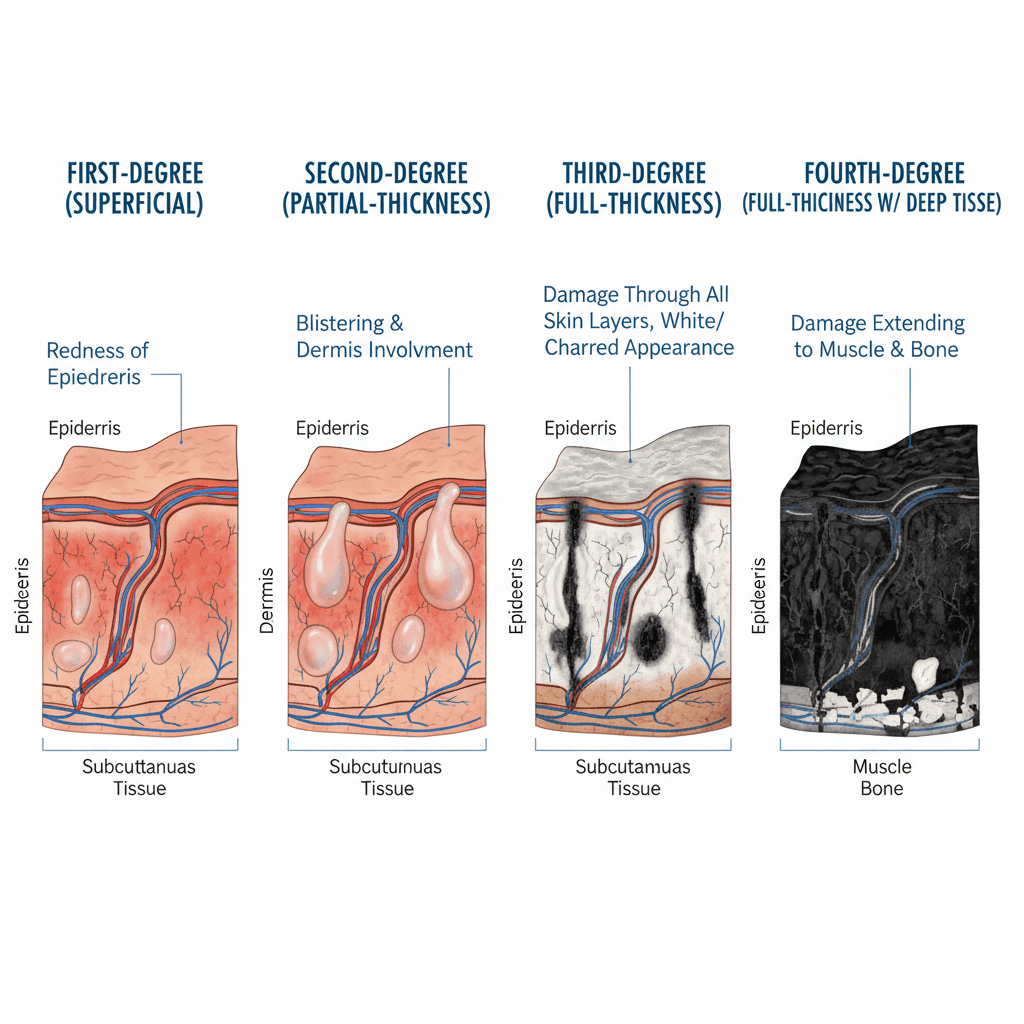
on the subject ofBurns
What It Is
Skin damage caused by heat, chemicals, or friction.
Patient Education
- [ · ]Cool immediately (no ice)
- [ · ]Keep clean and covered
- [ · ]Seek care for deeper burns
[ 07 ] Injury
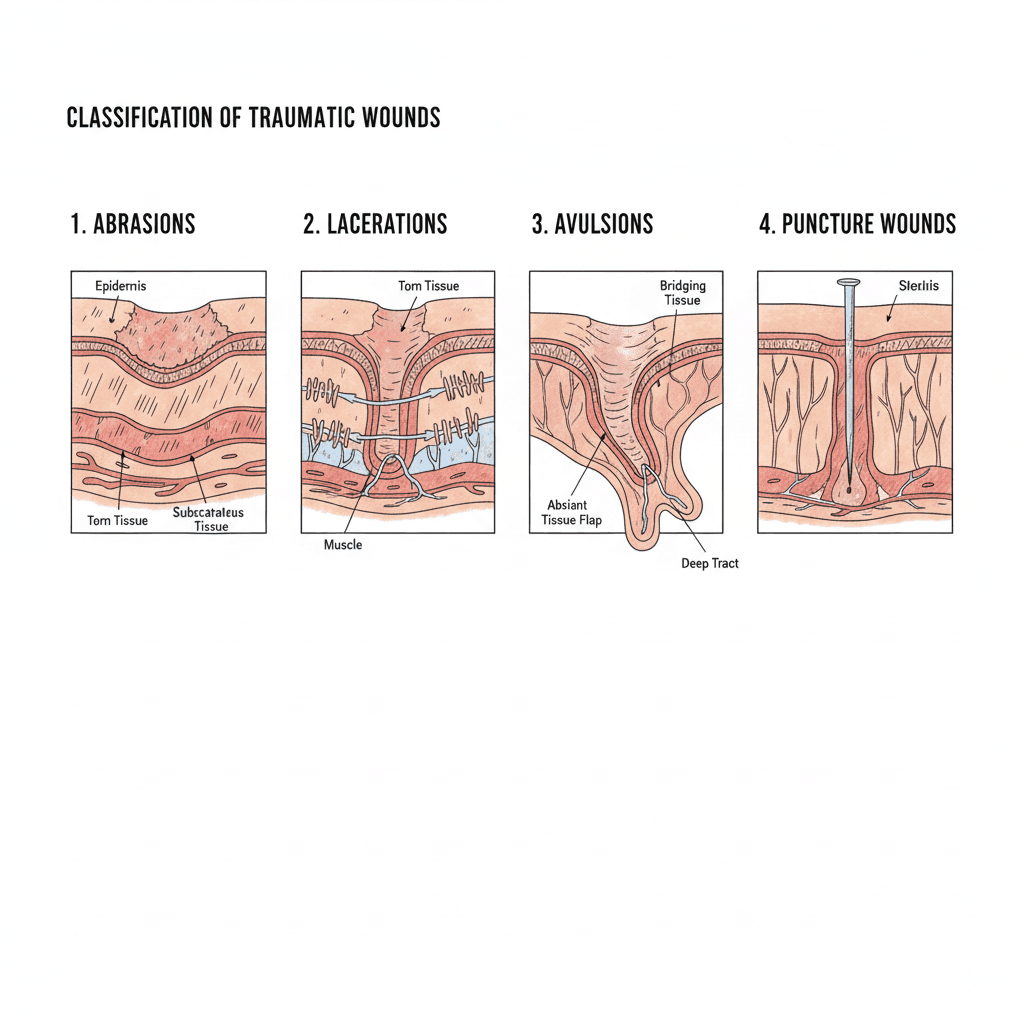
on the subject ofTraumatic Wounds
What It Is
Wounds from injuries, falls, or accidents — including lacerations and abrasions.
Patient Education
- [ · ]Clean and protect the wound
- [ · ]Watch for signs of infection
- [ · ]Follow provider instructions
[ 08 ] Non-Standard
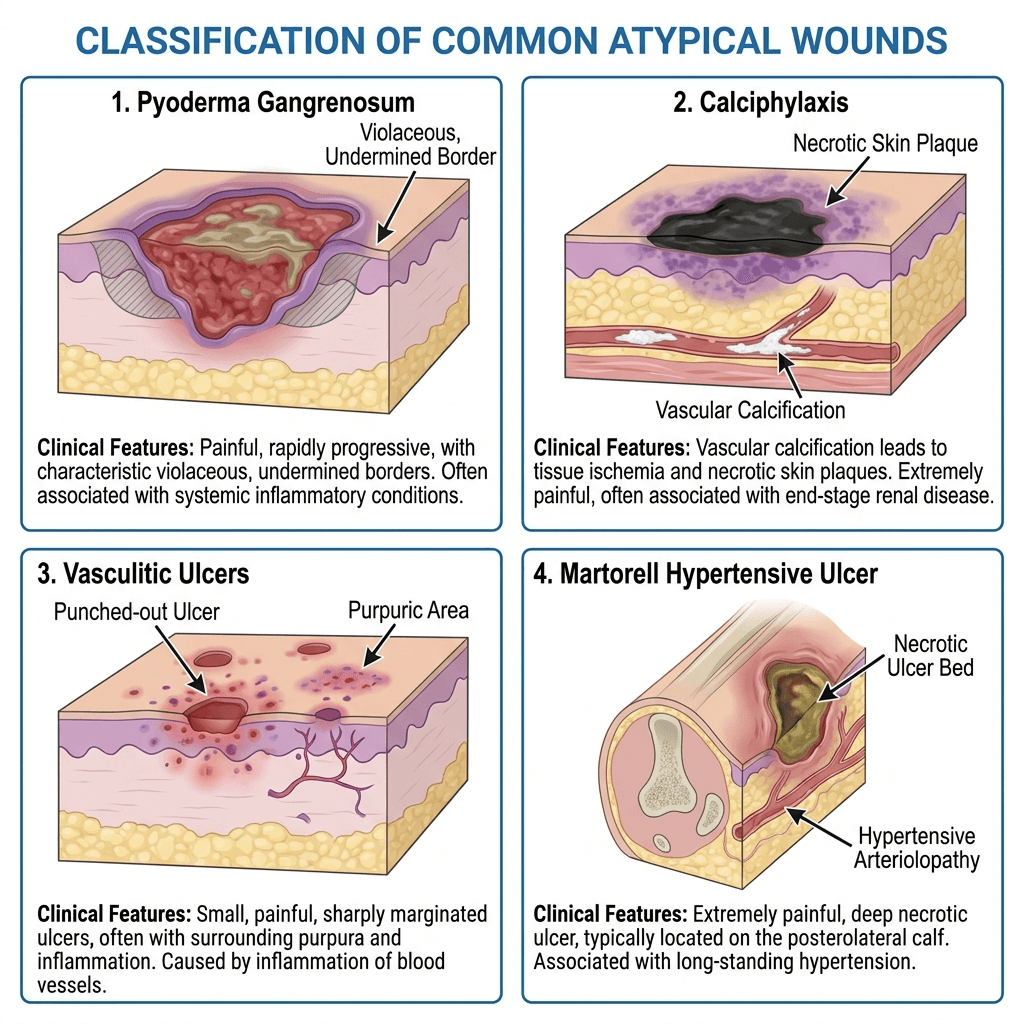
on the subject ofAtypical Wounds
What It Is
Atypical wounds do not follow the normal healing process or fit common categories. They often have unusual causes and may require specialized evaluation and treatment.
Patient Education
- [ · ]Do not ignore wounds that aren't healing as expected
- [ · ]Follow all treatment instructions carefully
- [ · ]Report any changes in size, pain, or drainage
- [ · ]Keep all follow-up appointments
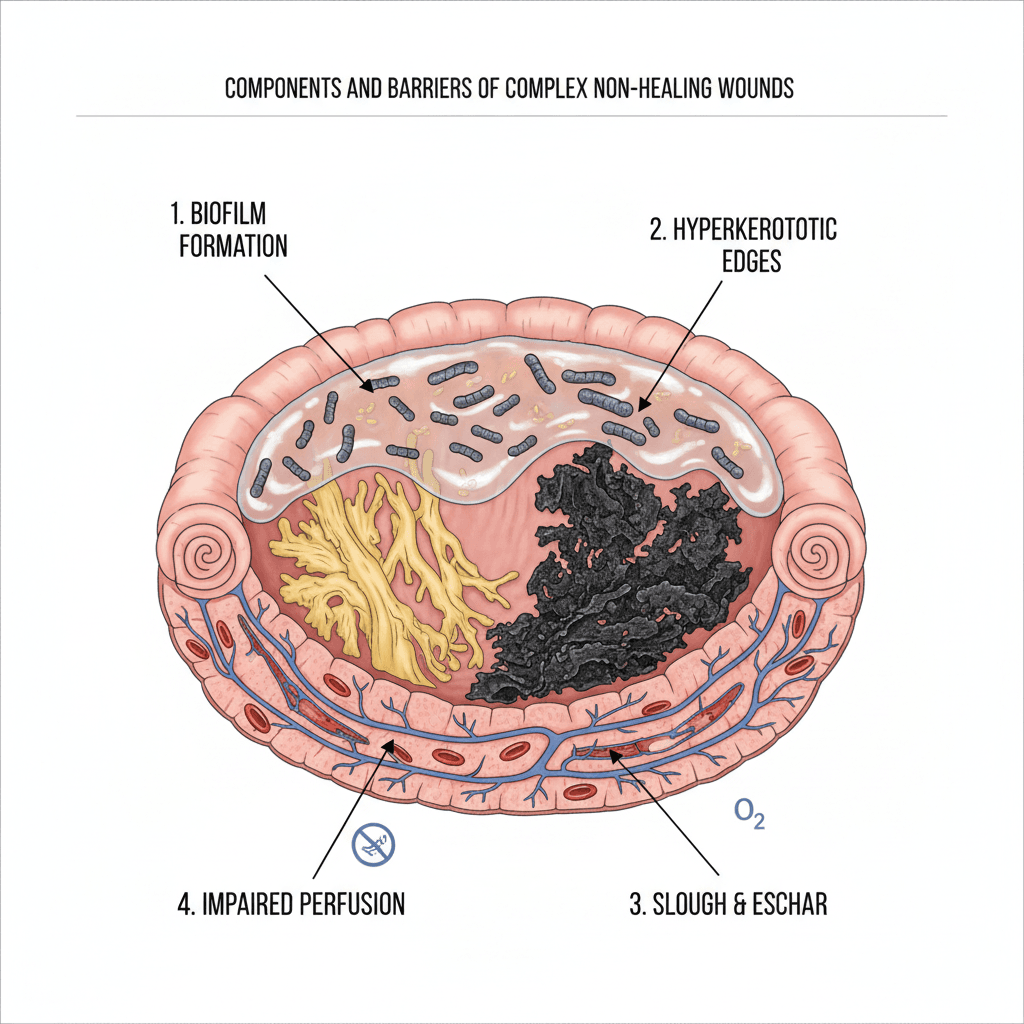
[ 09 ] Chronic
on the subject ofComplex Non-Healing Wounds
What It Is
Long-standing wounds that have stalled or resisted standard treatment — often benefiting from advanced modalities and close, consistent care.
Patient Education
- [ · ]Adhere to the full treatment plan
- [ · ]Manage contributing conditions (diabetes, vascular)
- [ · ]Optimize nutrition and hydration
- [ · ]Keep a consistent dressing schedule
[ Still Have Questions? ]
We’re Ready To Help
Every wound is different. Reach out for a personalized plan of care.
Email Jillian